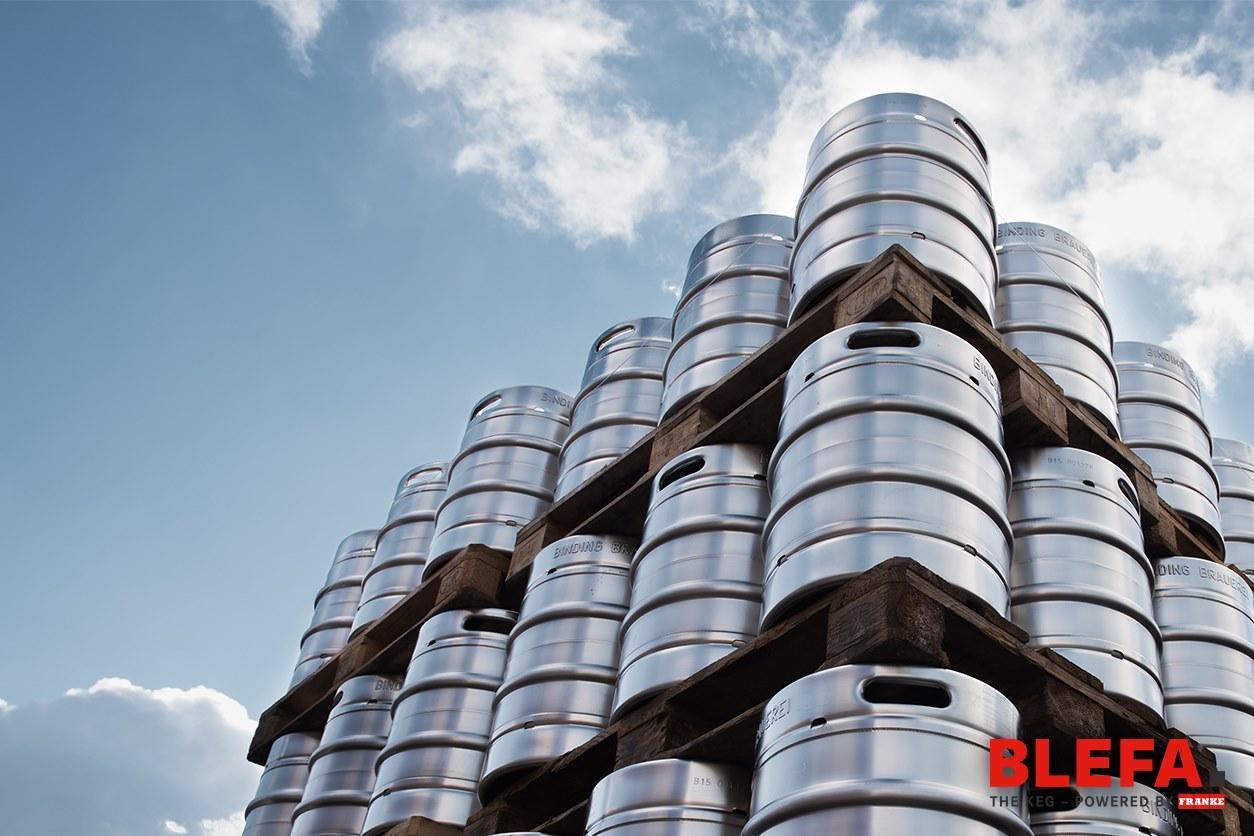
We recently sat down with Dematech's very experienced Brewing & Beverage Technologist - Hennie Blom, to discuss the ins & outs of beer kegging. Should kegs be used as a packaging option? Where to find beer kegs for sale in South Africa? Keg prices? What kind of volumes are available? How should a keg be cleaned?
All your beer kegging questions are answered here...
So, what is a keg?
A keg is used as a form of packaging/storing commonly used for beer, as well as other liquids. The nature of packaging makes it ideal for beer storage for the following reasons:
It is a pressure vessel with a maximum operating pressure of 3bar, so your beers carbonation level remains constant (on condition that the top pressure of your keg is at the saturation pressure of your beer).
Kegs from our supplier (BLEFA) are all manufactured from stainless steel 1.4301 (AISI 304) which is a high grade stainless steel, making it easily cleanable for hygienic storage conditions.
The nature of the packaging material (stainless steel) does not allow any sunlight through, which prolongs the shelf life of the packaged beer.
As long as all seals are in a good condition, the packaging is air-tight and therefore no oxygen will permeate into the packaging.
It is a robust form of packaging that does not easily rupture.
Due to the fact that CO2 (or N2) is used to dispense the beer from the keg, the beer remains in an O2 free atmosphere, which is important for beer quality.
Keg Cleaning
Keg Cleaning procedure:
Once a keg has been used, it is extremely important to effectively clean and sanitize it before it’s next use. At Bevplus we make use of an automated keg cleaner that washes, sterilizes and pre-pressurizes the keg with CO2.
Using an automated machine that has been designed for the cleaning of kegs is one’s best option, but not everyone has the funds to purchase such a machine. Therefore, we offer the service of cleaning your kegs using our machine for complete peace of mind.
If it is not possible to send your kegs through an automated keg washer for whatever reason, the steps below can be used as a guideline to manually clean your kegs.
The following standard steps should be taken when cleaning a keg:
Keg dismantling: The keg spear needs to be removed and the cleaning steps to follow must be performed on the spear as well as the keg body.
Organics removal: This is usually done using an alkaline cleaning detergent. It is important that the cleaning solution is at the appropriate temperature, concentration and is in contact with surface to be cleaned for sufficient time. The chemical supplier should be contacted for the recommended cleaning regime. It is important to check the seals integrity and hygienic condition (no cracks/cuts) during this cleaning as well.
Note: You cannot actually see whether the top part of the keg has been cleaned sufficiently, so it is recommend that extra contact time is given on this side of the keg to be safe.
Rinsing: Alkaline cleaning detergent to be rinsed off. This rinsing should be done with hot water. To check whether the cleaning detergent has been rinsed adequately, one can compare the feed rinse water pH to the rinse water pH out of the keg. Once they are the same, the keg has been adequately rinsed.
Note: It is possible for beer-stone to form in your keg, which will not be removed with the alkaline cleaning solution. If this is present in your keg, the standard approach is to perform an acid wash. This is usually a blend of nitric and phosphoric acid – one should contact your chemical supplier for an appropriate acid for beerstone removal.
Sanitizing: Once all of the organics have been removed the resulting keg and spear should be clean – a manual inspection needs to be done to ensure that everything is in fact completely clean (no organic deposits anywhere to be seen). When the keg is completely clean, it needs to be sanitized with a sanitizing solution or sterilized with steam (our keg cleaning machine sterilizes the keg sides, spear and fitting using steam). If using a sanitizing solution, one needs to make sure that it comes in contact with the entire surface area of the keg for the appropriate amount of time (care must also be taken to use the correct concentration).
Once all the parts of the kegs have been sanitized and put back in place, the keg is ready to be flushed with CO2 and counter-pressurized.
If all the above steps are followed when cleaning a keg, the resulting keg will be fit for product filling under sanitary conditions with a very low chance of microbiological spoilage.
Keg Volume
So let’s look at what influences your choice of the size of keg.
Even though the beer is pushed out using CO2 and O2 pick-up should be minimal, it is important to note that one would prefer to keep a single keg connected for dispensing for as short a time as possible (There could still be some O2 in the CO2 feed line before being connected, which will effect beer quality – A good practice will be to flush this line adequately before connecting it to the coupler). Fresh beer is good beer!
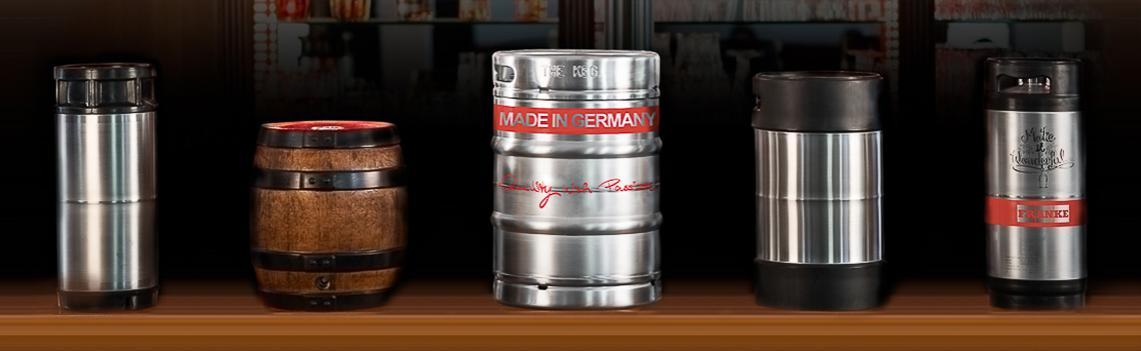
The kegs we have to offer are 10L, 15L, 30L and 50L. Therefore you should decide on a volume that will have your keg connected for around 1 week – 2 weeks maximum.
As a homebrewer you can also have options to dry-hop kegs differently if you have 2 small kegs as apposed to one large keg – So much room for activities.
The design of the keg is important for transport reasons – This is probably not so important for homebrewers but is an important consideration otherwise. It is possible to pack more euro kegs on a single pallet than the slim kegs – when packing them to the same height. The slim kegs do however have an advantage when packing into a dispensing room, seeing as you can fit more of them in a row than the euro kegs.
Keg packaging
Once one has decided to use kegs as a packaging/storing option, a decision on the following factors need to be made:
What size/design of keg will I be using?
What type of spear will I be using? (This will subsequently influence the type of coupler used for dispensing)
To sum it up:
If you are more interested to transport your kegs in the most space efficient way – go for the euro type keg.
If you are more interested in storing the maximum number of kegs in a small space that will be connected up for dispensing – go for the slim type keg.
So where do I find beer kegs for sale in South Africa and what are the prices of beer kegs?
At www.bevplus.com we offer quality imported BLEFA kegs in South Africa. Our keg prices can range from R1166.96 to R1940.00 ex VAT depending on the size & type of keg needed, Bevplus also offer PET 30L One-way kegs for R193.91 ex VAT (prices subject to change).
BLEFA are the only keg manufacturer worldwide to give you a 30 year guarantee on their barrels – a long-term safeguard for your investment and the written promise of reliable keg quality of the highest order! They don’t only manufacture a great variety of kegs in top quality, but also specially to your specific wishes and requirements.